RDA Approved Housing Societies 2026: A Buyer’s Safety Checklist
Buying land in the twin cities feels exciting until the paperwork stage, when many first-time buyers discover that the “plot” they loved is tied up in litigation. The single biggest protection against that heartbreak is choosing among legally recognised, RDA approved housing societies 2026 rather than cheap but unverified schemes. Approved status means your money is anchored to a real, sanctioned master plan.
This guide walks you through exactly how to verify approval, read the warning signs, and compare options so your investment in Rawalpindi real estate stays secure for the long run.
Why RDA approval matters more in 2026 than ever
The Rawalpindi Development Authority regulates land use, layout sanctioning, and no-objection certificates across the district. When a society carries valid approval, its roads, utility corridors, and plot boundaries are recorded with the authority. That record is what protects your title during resale, transfer, or a future dispute.
In 2026, with property demand climbing around the Rawalpindi Ring Road and new interchanges, unapproved “pre-launch” schemes have multiplied. Approval is the line that separates a genuine community from a marketing flyer.
What approval actually guarantees
- A sanctioned layout plan that cannot be quietly redrawn to shrink your plot.
- Legally reserved space for roads, parks, graveyards, and a grid station.
- Clear eligibility for utility connections once development milestones are met.
- A transfer process the authority will recognise, protecting resale value.
How do you verify an RDA approved housing society?
Never rely on a brochure or a salesperson’s word. Verification is a short, methodical process that any buyer can complete in a week.
- Ask the developer for the NOC and layout approval letter, noting the reference number and date.
- Cross-check that reference directly with the authority’s records or helpdesk.
- Confirm the specific block and plot number fall inside the approved boundary, not a future “extension”.
- Verify the land ownership and mutation in the revenue record for the same khasra numbers.
- Keep stamped copies of every document before transferring any payment.
You can review the authority’s mandate and public notices on the official Rawalpindi Development Authority portal, which also lists schemes flagged as illegal or under action. Treating that list as your first filter saves months of risk.
Secure societies vs unapproved schemes: a quick comparison
| Factor | RDA Approved Society | Unapproved Scheme |
|---|---|---|
| Legal title security | Strong, recorded layout | Weak, disputable |
| Utility connections | Planned and eligible | Uncertain or illegal |
| Resale demand | High, bank-financeable | Low, cash-only buyers |
| Price trajectory | Steady appreciation | Volatile, risk-discounted |
| Risk of demolition | Minimal | Real possibility |
Reading the warning signs early
Fraudulent schemes share a predictable pattern. Spotting it quickly keeps your savings intact.
Be cautious when a society offers prices far below the area average, pushes “limited-time pre-launch” urgency, or cannot produce a referenced NOC. A trustworthy project welcomes verification; a questionable one deflects it. If a developer discourages you from checking official records, treat that as the answer.
Questions a serious buyer should ask
- Is development on the ground matching the sanctioned master plan?
- Are there filed cases against the society or its directors?
- What percentage of promised infrastructure is already complete?
- How are instalment defaults and possession delays handled contractually?
Balancing residential and commercial plots
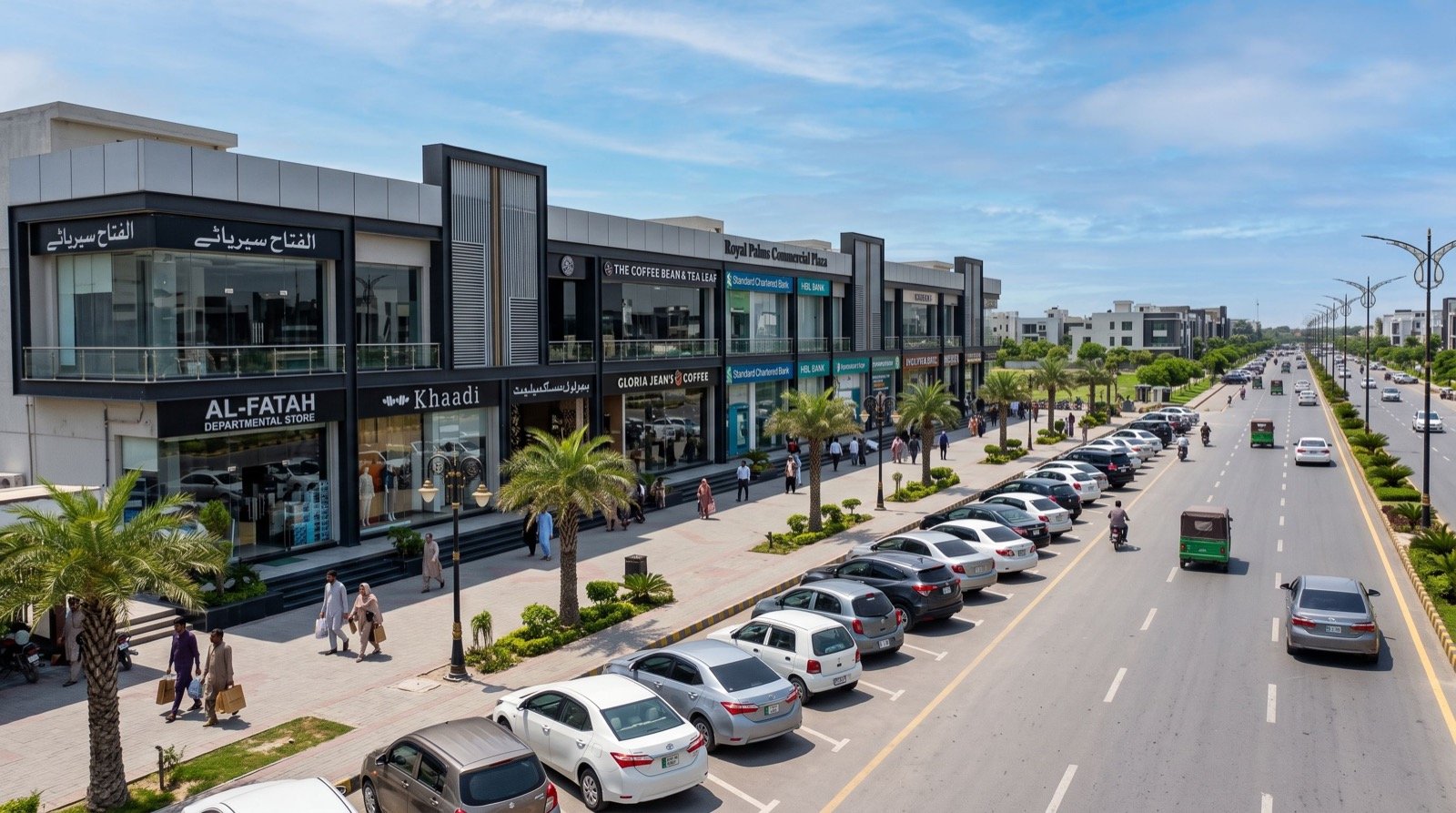
Once you have shortlisted approved societies, the next decision is asset type. Residential plots offer stability and broad resale demand, while commercial plots can deliver higher rental yield. A well-located 6 Marla Commercial Plot on a main boulevard, for example, tends to command stronger footfall and tenant interest than an interior residential lane.
Many investors in 2026 split their budget: a residential plot as a long-hold anchor and a smaller commercial stake for cash flow. Working with an experienced local team helps you match the right plot category to your actual goals rather than chasing hype.
A practical tip from the field
Before you commit, visit the site at two different times, once on a weekday morning and once near sunset. Approved, active societies show visible construction crews, metalled roads, and moving traffic. Quiet, empty plots with only boundary pillars often signal a scheme that has stalled or overbooked. This single habit has saved careful buyers from countless bad deals.
Understanding the transfer and legal cost picture
Approval protects your title, but a smooth purchase also depends on getting the transfer mechanics right. Many buyers budget only for the plot price and are caught off guard by the surrounding costs that every legitimate transaction carries.
Before you sign, build a complete budget that accounts for transfer fees, stamp duty, and any society membership or development charges. A verified society issues clear, itemised receipts for each of these, which is itself a sign of good governance.
Typical costs beyond the plot price
- Transfer fee — paid to the society for recording the new ownership.
- Stamp duty and registration — statutory charges calculated on the valuation.
- Development charges — where infrastructure is still being completed.
- Membership or possession dues — one-time society charges at handover.
Here is a practical sequence that keeps the legal side clean. First, agree the price and get a written sale agreement listing the exact plot and block. Second, pay a token only after verifying ownership. Third, settle the balance through traceable banking channels. Fourth, complete the transfer in the society office and collect a stamped allotment in your name.
Buyers who rush this sequence, or who pay large sums in cash against a verbal promise, create exactly the openings that disputes exploit. Patience and paperwork are not bureaucratic hurdles; in Pakistani real estate they are the cheapest insurance you will ever buy. An approved society makes each of these steps straightforward because the records already exist and the process is standardised.
Frequently Asked Questions
How can I confirm an RDA approved housing society is genuine?
Request the NOC and layout approval letter, then verify the reference number against the authority’s official records or public notices. Match your exact block and plot to the sanctioned boundary before paying anything.
Are RDA approved societies more expensive?
Often slightly, because legal security and completed infrastructure carry a premium. That premium is usually offset by steadier appreciation, bank financing eligibility, and far lower risk of loss.
Can I get a bank loan for a plot in an approved society?
Yes. Lenders generally finance only plots with clear, recognised titles, so approved societies are far more likely to qualify than unverified schemes.
What if a society is only partly approved?
Buy only within the approved and developed portion. Avoid “extension” or “phase 2” blocks that are marketed before their own approval is issued, as those carry the same risks as any unapproved scheme.
Conclusion: invest with verified confidence
In 2026, the smartest real estate decision in Rawalpindi is also the simplest: confine your search to legally recognised, RDA approved housing societies, verify every document yourself, and match the plot type to your goals. Security and appreciation follow approval, not hype. Start your shortlist with an approved, actively developed community today, speak to a verified consultant, and make your next property purchase one you never have to worry about.